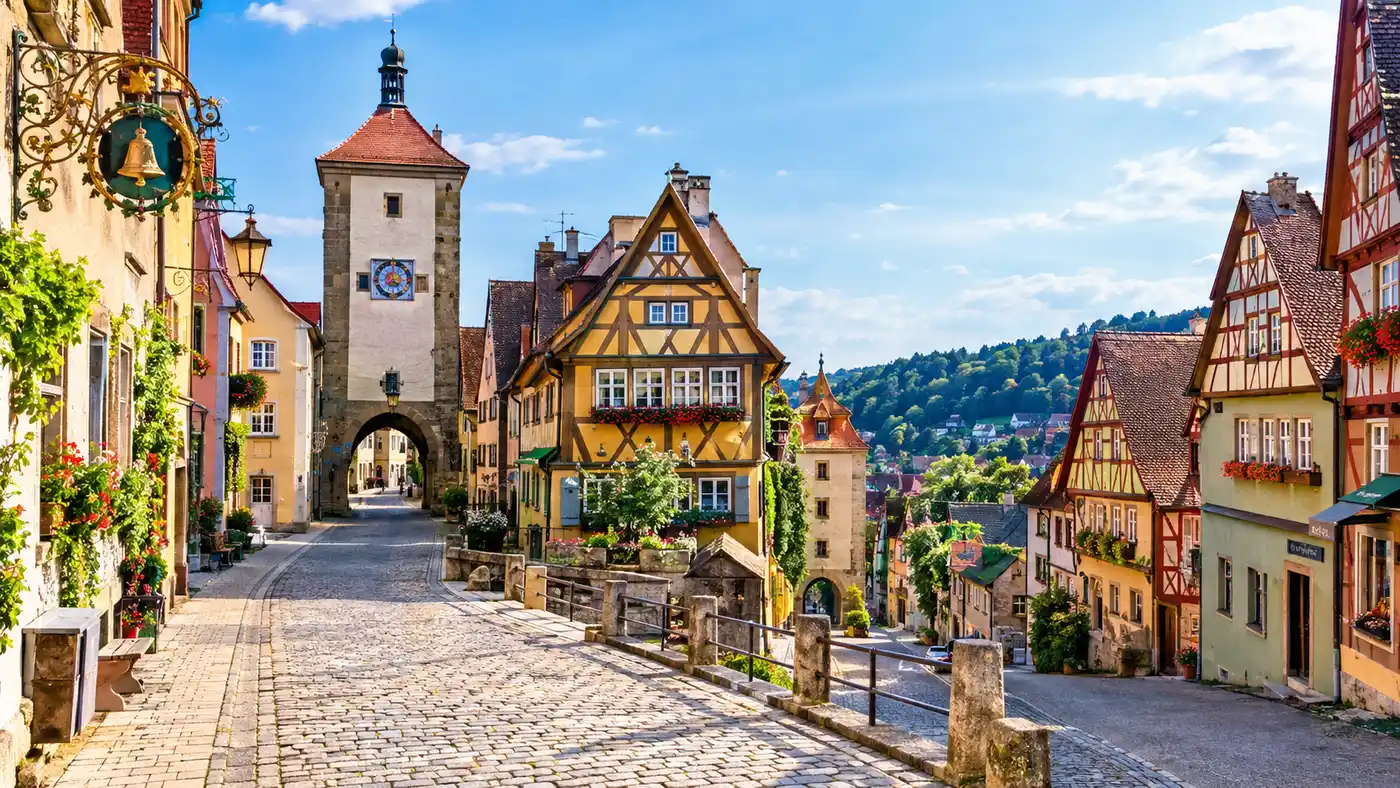
Best Towns and Stops Along Germany's Romantic Road
Discover the best towns on romantic road germany from Würzburg to Füssen. Honest tips on Rothenburg, Dinkelsbühl, …
Continue Reading →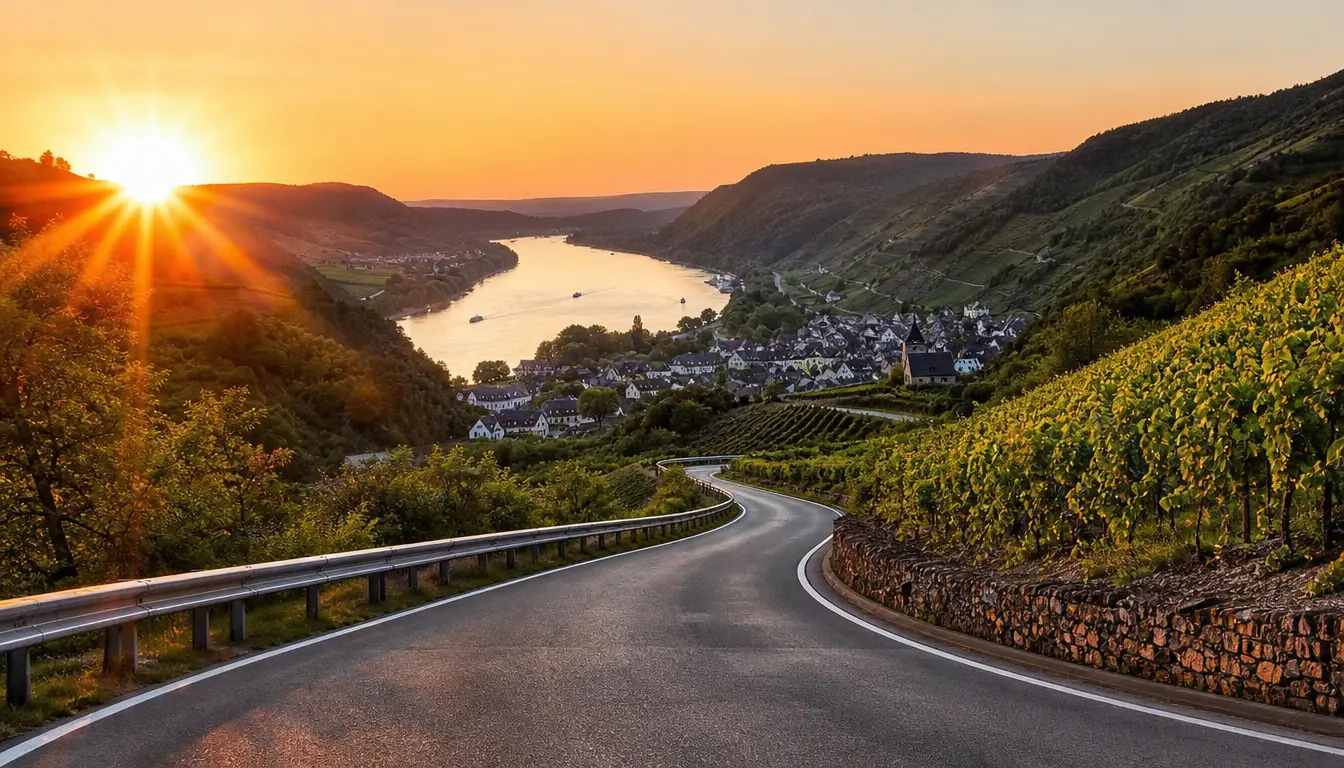
From Franconian wine cellars down to the limestone crags of the Bavarian Alps, explore Germany's Romantic Road at your own unhurried pace.
Discover what makes romantic road germany unforgettable.
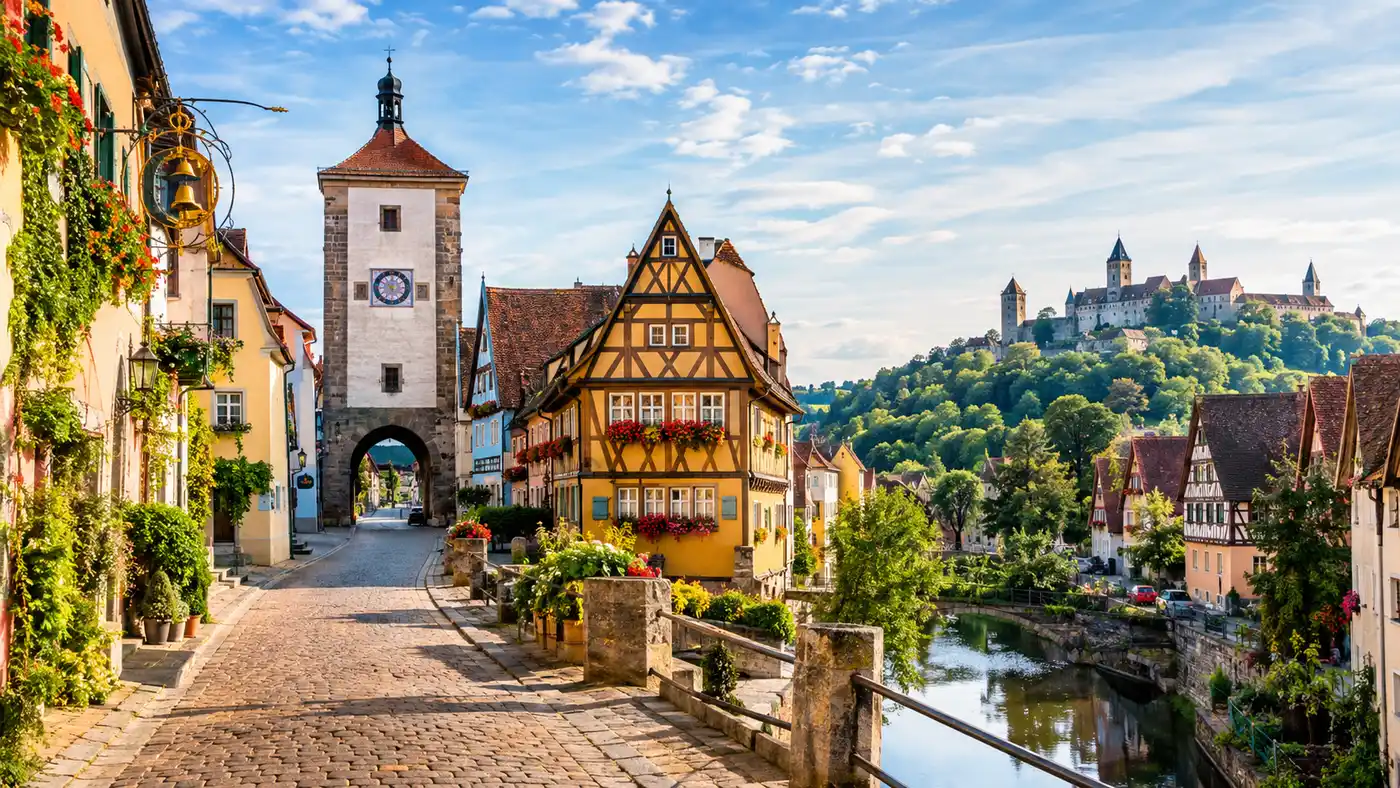
Follow quiet secondary roads winding through the Tauber River valley and rolling Swabian hills. Dedicated green signposts guide both motor vehicles and touring bicycles across well-paved rural paths.
Learn more →
Climb inside intact ramparts in Dinkelsbühl, explore the meteorite crater town of Nördlingen, and pause inside the Wieskirche. These stops reveal centuries of southern German craft and architectural rivalry.
Learn more →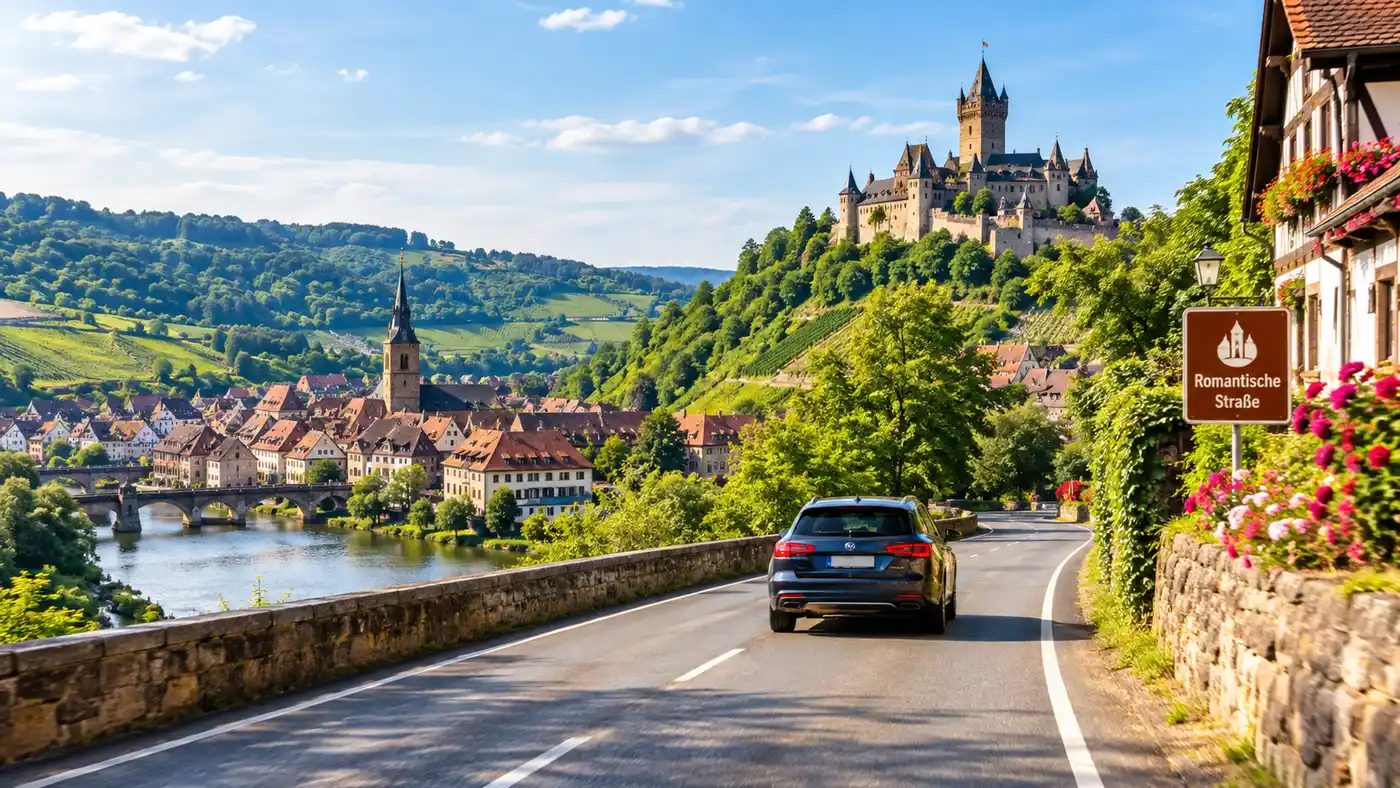
Navigate between major stations using the regional Bayern-Ticket, or take advantage of summer touring buses connecting smaller villages. Driving is easy, but train hops let you watch the farmland glide past without parking stress.
Learn more →What to expect from arrival to departure.
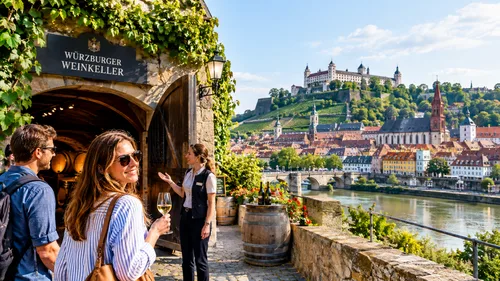
Collect your vehicle or rail pass and tour the UNESCO-listed Residenz palace, then sip dry white Silvaner on the stone Alte Mainbrücke bridge.
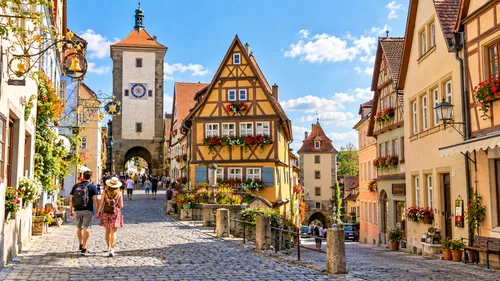
Drive through vine-covered hills into Rothenburg ob der Tauber. Walk the elevated wall perimeter at dusk after day-tripper buses head back to Frankfurt.
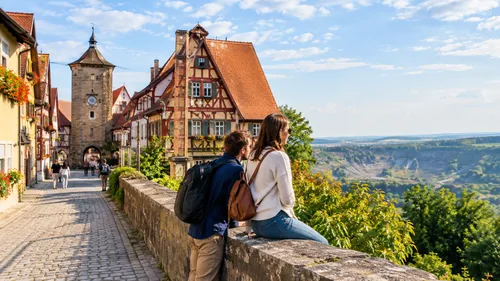
Stop in Dinkelsbühl to admire pristine gabled townhouses, then continue to Nördlingen, built entirely inside an ancient meteorite impact basin.
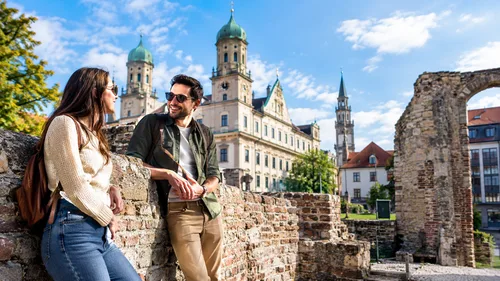
Wander through the Fuggerei, the world's oldest social housing settlement still in operation, and explore Renaissance water management systems.
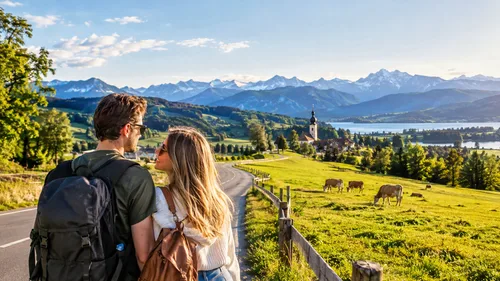
Cut across rural dairy country to visit the Wieskirche, an ornate rococo pilgrimage church standing alone in open alpine meadows.
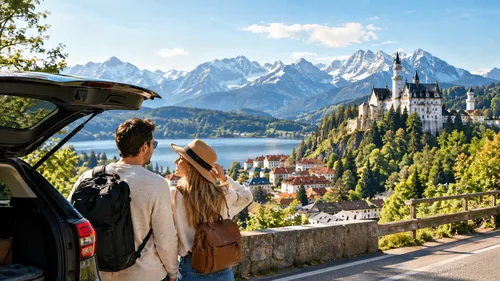
Tour Neuschwanstein Castle and Hohenschwangau, take a brisk dip in the Alpsee, and cross the border into Tyrol or catch the regional train back toward Munich.
Established in 1950 to revive tourism after the second world war, the German Romantic Road connects the baroque bishops' palace in Würzburg with the jagged peaks outside Füssen. It strings together 29 fortified towns, stone river crossings, and quiet agricultural plateaus. Most drivers tackle the route north to south, trading river valleys for open farmland before the Alps punch through the horizon on the final stretch toward the Austrian border.
Driving the Romantische Straße gives you a cross-section of southern Germany that high-speed rail completely bypasses. You spend your mornings walking timber-framed alleys where cobblers still work, stop for cold pilsner in village squares that hold fewer than 800 residents, and end your evenings watching storks nest on church belfries. While tour buses crowd a handful of marquee spots like Rothenburg ob der Tauber, dozens of quieter villages sit just eleven minutes off the main road waiting to be explored.
Whether you plan to rent a car, catch local regional trains, or cycle the parallel gravel paths, this romantic route through Germany rewards slow movement. Take the country lanes instead of the B25 highway when you can, pull over for farmstand plums in August, and give yourself enough days to let the postcard imagery give way to authentic Bavarian life.
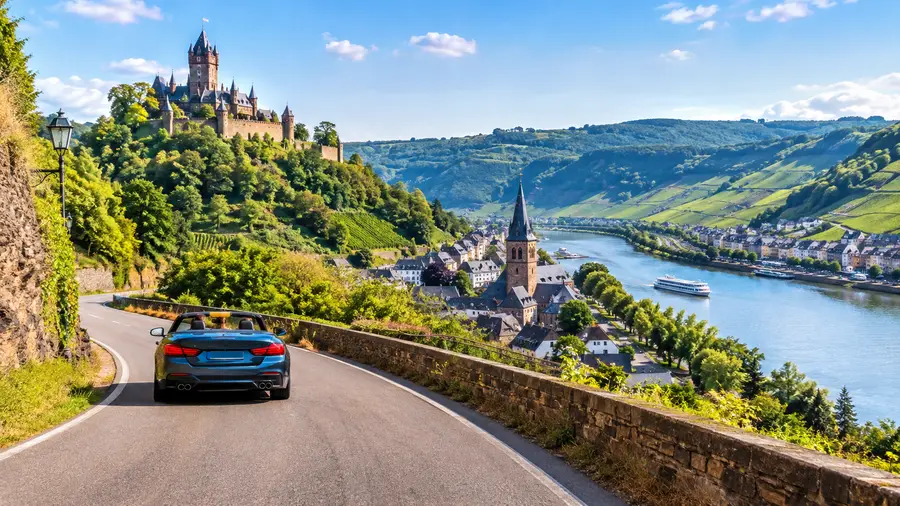
Stopping in Nördlingen was the best decision we made. Walking the complete circle along the covered parapet without any tour groups felt like stepping straight into the 15th century.
Driving between towns was effortless and well signposted. Just make sure to pre-book Neuschwanstein weeks ahead, because we had to settle for viewing it from Mary's Bridge after tickets sold out.
The Franconian wine villages along the Tauber Valley beat the southern castle crowds by a mile. Sitting on the bridge in Würzburg with a glass of chilled Silvaner was absolute perfection.
We followed the route using regional trains and local buses with the Bayern-Ticket. It took some schedule planning, but skipping parking hassles in Rothenburg saved us a lot of stress.
Compare options and book directly below.
Unlimited single-day travel on regional trains and local buses across Bavaria. Perfect for traveling between Würzburg, Augsburg, and Füssen without a car.
Covers entry into over forty state-run castles and residences, including the Würzburg Residenz, Neuschwanstein Castle, and the Munich Residenz.
Daily allowance for municipal parking lots outside historic city walls, plus small cash admissions to climb local church towers and defense walks.
Everything you need to know before visiting romantic road germany.
Hours: Open 24 hours daily year-round (public scenic route; individual attractions, castles, and visitor centers along the route maintain their own seasonal opening hours)
| Bayern-Ticket (Regional Train) (Price scales by passenger count) | €29 - €53 |
| Bavarian Palace 14-Day Pass (Valid 14 consecutive days) | €35 single / €66 partner |
| Self-Drive Town Budget (Typical parking and tower fees) | €12 - €18 / day |
📍 Scenic route between Würzburg and Füssen, Bavaria and Baden-Württemberg, Germany
See it before you go.
Worth combining with your romantic road germany visit.
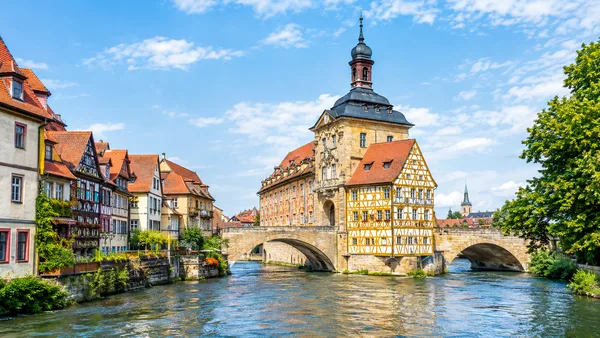
A historic UNESCO city built on seven hills, famous for its half-timbered town hall balanced over the river and smoked beer breweries.
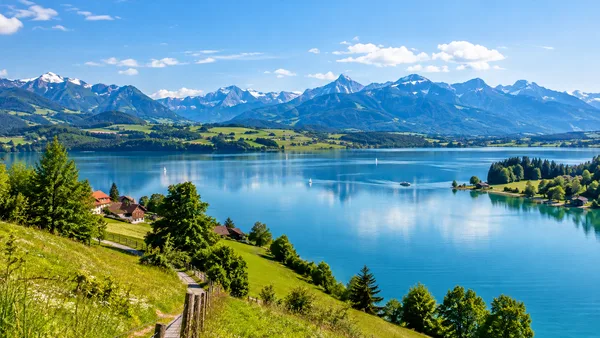
An expansive reservoir offering panoramic swimming beaches, sailing, and boat trips with direct views back toward the royal castles.
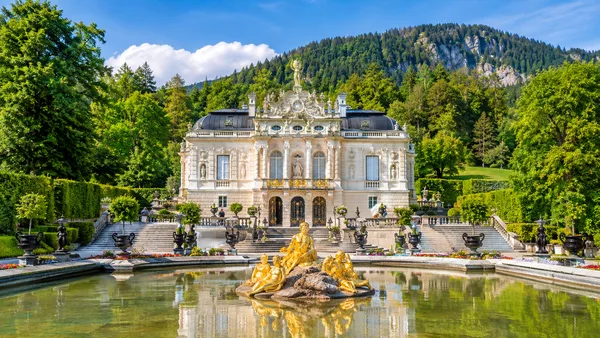
King Ludwig II's most intimate completed palace, tucked inside the secluded Graswang valley with manicured gardens and an artificial grotto.
Romantic Road Germany welcomes all visitors with accessibility features and family-friendly amenities.
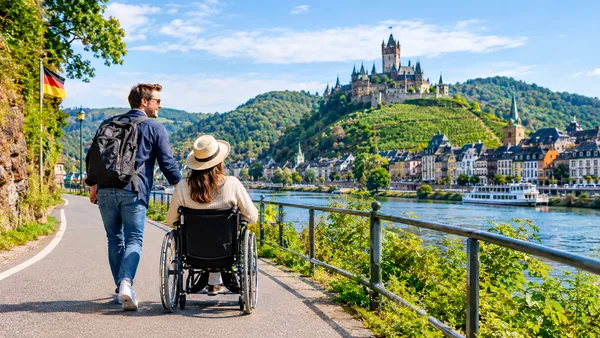
While driving the route and visiting modern facilities is accessible, many historic medieval towns along the path (e.g., Rothenburg ob der Tauber, Dinkelsbühl) feature extensive cobblestone paving, curbs, steep hills, and limited elevators in older heritage structures.
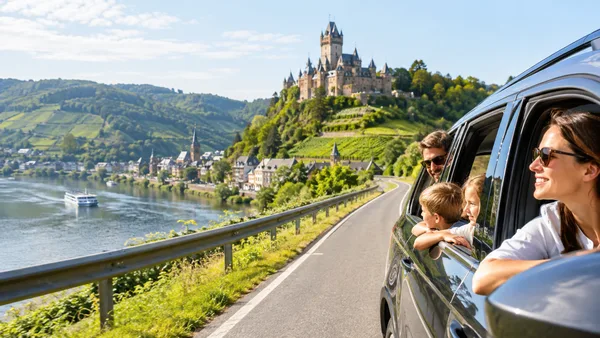
Very family-friendly, offering fairytale castles, medieval walls, and open countryside. Strollers can be used throughout towns, though historic cobblestone streets and steep pathways up to castles can be bumpy and physically demanding.
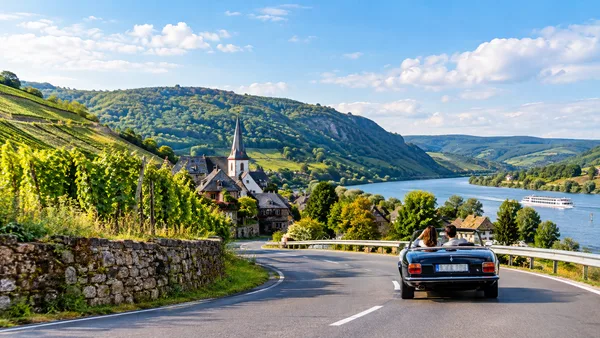
German and English are widely spoken across hotels, train stations, and regional ticket desks. Audio guides at larger landmarks often add Japanese, Italian, and French.
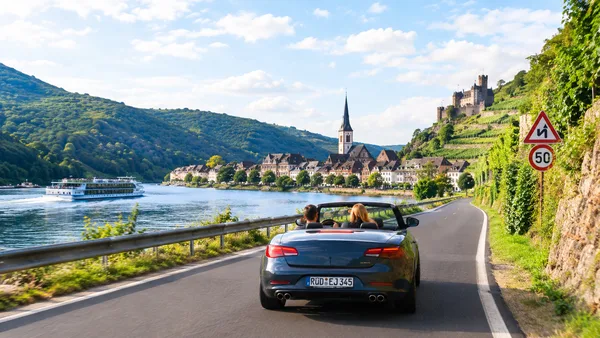
Most commonly traveled by private car, camper, or motorcycle following the brown 'Romantische Straße' signs. The route can also be navigated via regional trains (Deutsche Bahn), seasonal tourist coaches (Romantic Road Bus), or along dedicated long-distance cycling and hiking trails.
Dive deeper into romantic road germany.
Discover the best towns on romantic road germany from Würzburg to Füssen. Honest tips on Rothenburg, Dinkelsbühl, …
Continue Reading →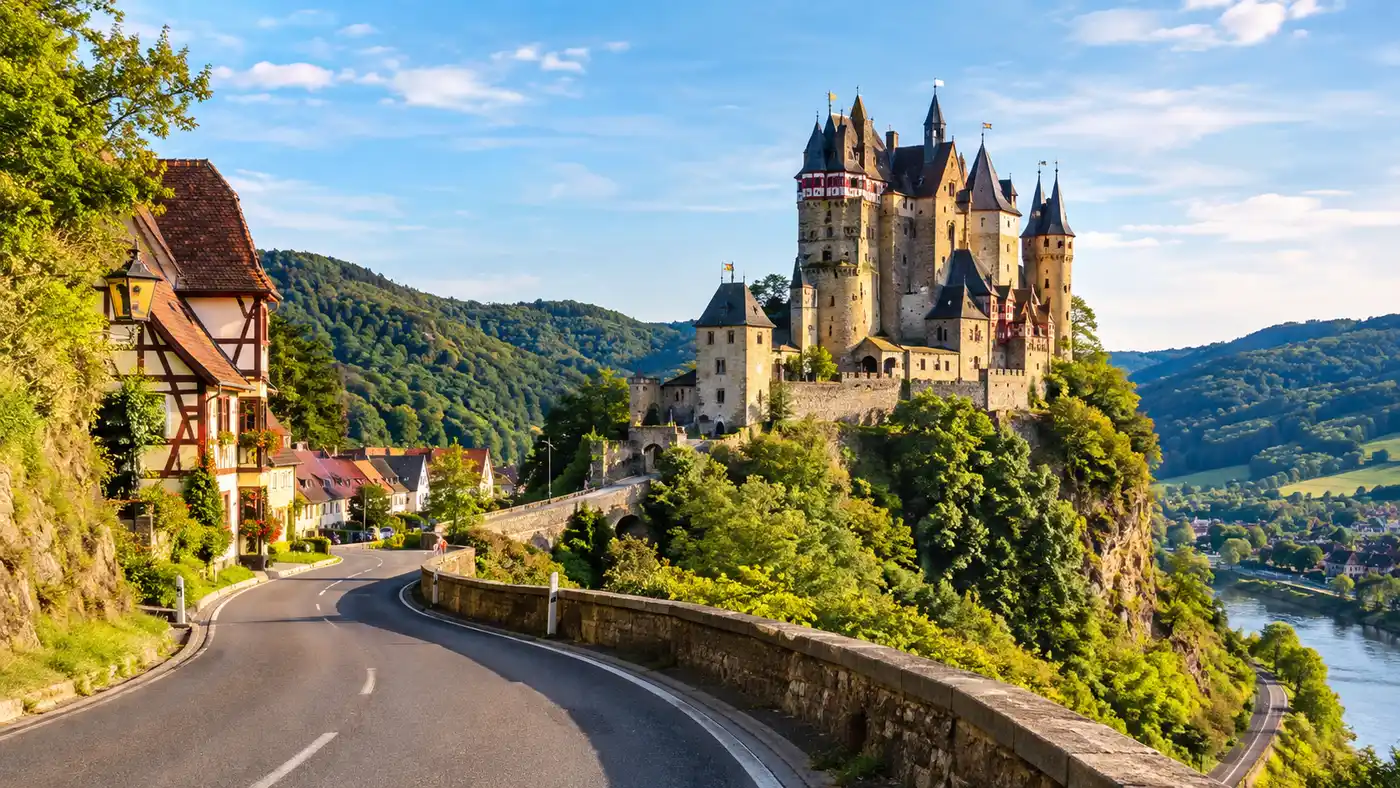
Explore castles on the Romantic Road Germany: from Neuschwanstein to Harburg. Insider ticket tips, costs, and practical …
Continue Reading →
Master driving the Romantic Road in Germany with our complete guide: rental tips, traffic rules, practical costs, scenic …
Continue Reading →
Plan your romantic road germany itinerary with our tested 3, 5, and 7-day routes. Discover driving tips, when to visit, …
Continue Reading →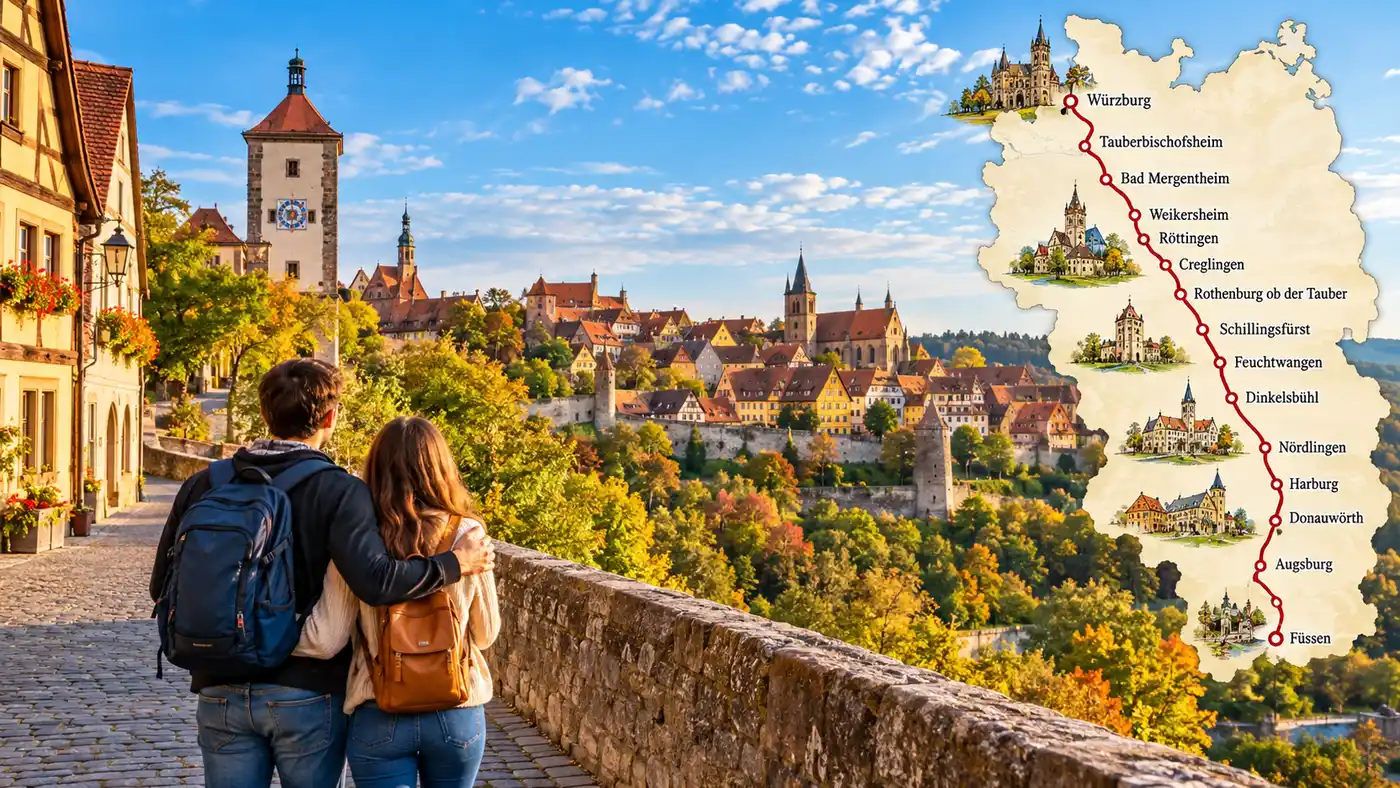
Plan your trip with this detailed Romantic Road Germany map and route guide. Discover key towns, driving directions, …
Continue Reading →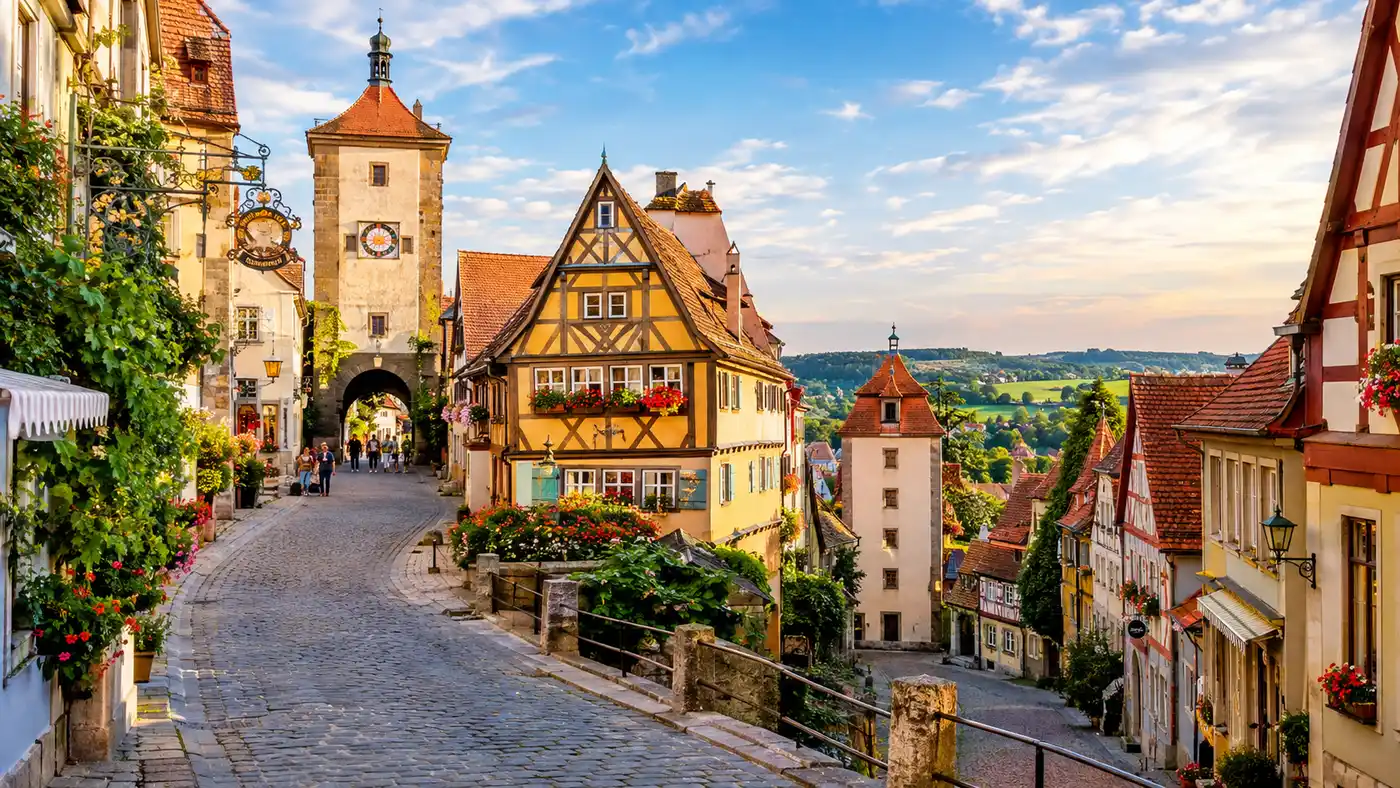
Discover the best Romantic Road Germany tours and day trips from Munich or Frankfurt. Compare bus tours, top medieval …
Continue Reading →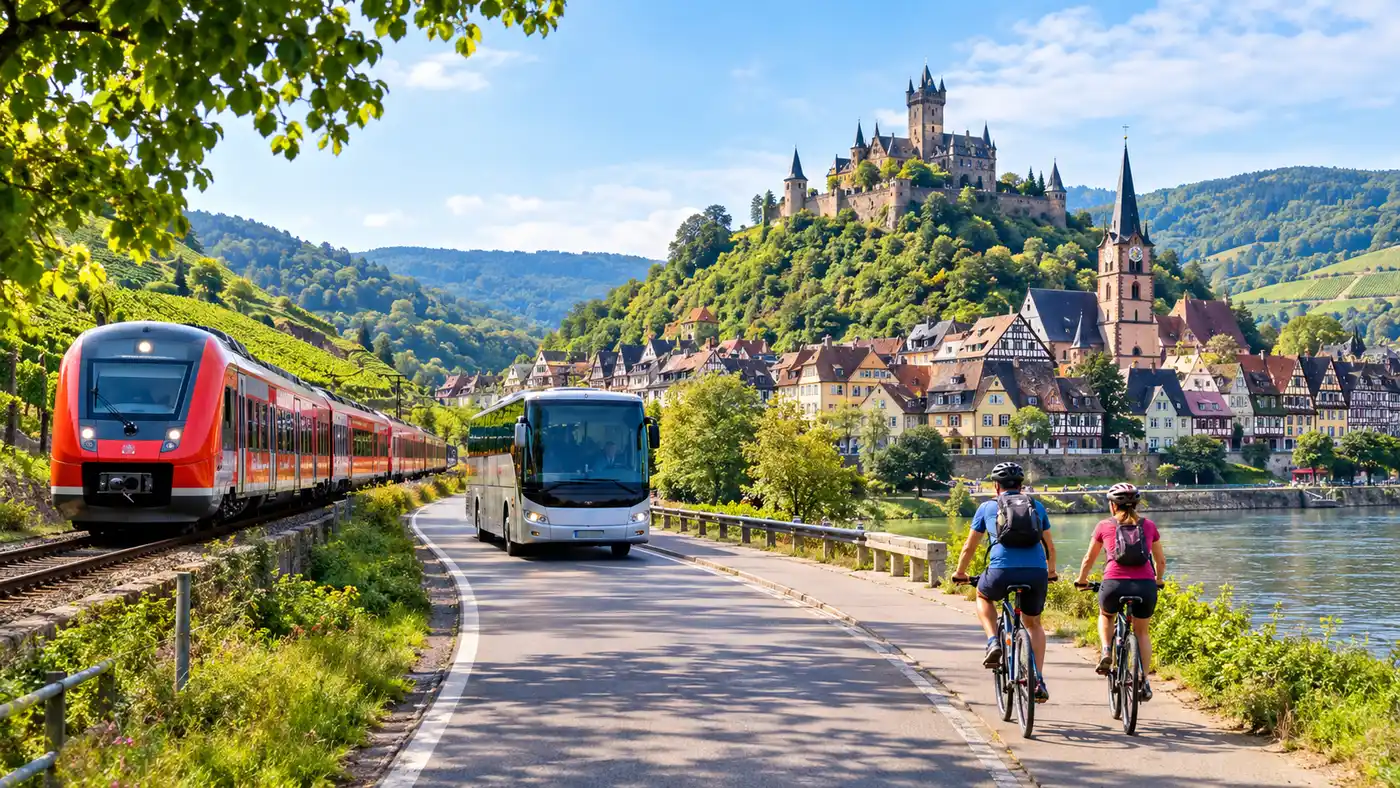
Plan your trip along the romantic road germany by train, bus, or bike. Practical timetables, transfers, cycling paths, …
Continue Reading →Common questions about romantic road germany.
The route runs entirely through southern Germany, starting in northern Bavaria at Würzburg, clipping the eastern edge of Baden-Württemberg around the Tauber Valley, and traveling south down to Füssen in the Allgäu Alps near the Austrian border.
Yes, but do not try to drive all 460 kilometers. Pick a focused three-day section, such as Würzburg down to Dinkelsbühl, or Augsburg down to Füssen. Rushing the whole drive in 72 hours turns a relaxing backroad holiday into an exhausting marathon of parking lots.
The Romantic Road centers on walled medieval towns, farmland, baroque churches, and royal palaces. The Black Forest is primarily about dense evergreen ridges, thermal spa towns, hiking trails, and winding mountain passes. Choose the Romantic Road for architecture and history, or the Black Forest for nature and quiet trails.
Carry at least €50 in cash every day. While hotels and larger restaurants accept Visa and Mastercard, smaller bakeries, parking meters, castle shuttle buses, and farmstand markets often take only cash or local German debit cards.
Most towns restrict or ban non-resident vehicular traffic within their historic wall rings. Large, pay-and-display parking rings sit right outside the main gates. Park outside and walk in through the stone portals; it takes under five minutes and prevents hefty municipal fines.
If your driver's license was issued outside the European Union or European Economic Area, German law technically requires an International Driving Permit alongside your valid domestic card. Rental counters frequently ask to see it alongside your passport.
Interior tours must be booked online at least two to four weeks in advance during high season. Tickets sell out daily, and walk-up counter slots in the village of Hohenschwangau are strictly limited and often gone by 08:30.
Discover our town-by-town guides, castle reservation timetables, and field-tested driving tips before you turn the ignition key.