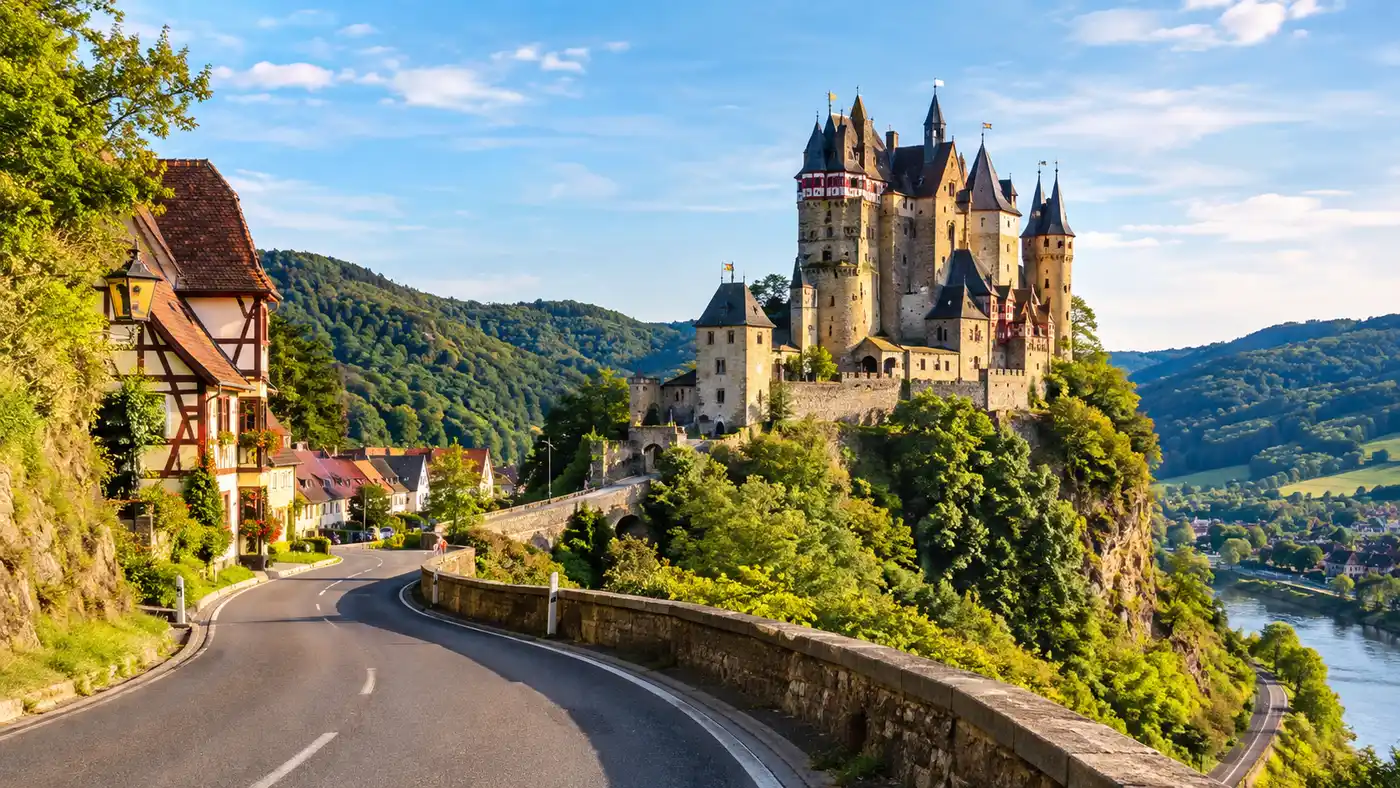
Castles on the Romantic Road in Germany
Most people imagine Ludwig's white turrets rising above the mist when they start looking into castles on the romantic road germany, but the route is not a single fairytale reel. It stretches over 460 kilometers from the vine-covered hills of Würzburg down to the foot of the Bavarian Alps. Along that path sits an absurd variety of stone architecture: drafty medieval garrisons that smelled like damp wool and wet horse, Renaissance retreats filled with carved stag antlers, and 19th-century theater sets built for an eccentric king who slept all day.
I learned quickly that trying to see every fortress along the way will turn your brain into mush. By day three, tapestries blur together, baroque ceiling frescoes start to look dizzying, and your legs will ache from climbing cobblestones laid down in the 1300s. You need a filter. Some of these stops deserve half a day of quiet wandering, while others only warrant twenty minutes to stretch your legs, snap a photograph of a gate tower, and grab a warm pretzel from a bakery down the street.
Book your romantic road germany experience:
The Heavyweights: Neuschwanstein and Hohenschwangau
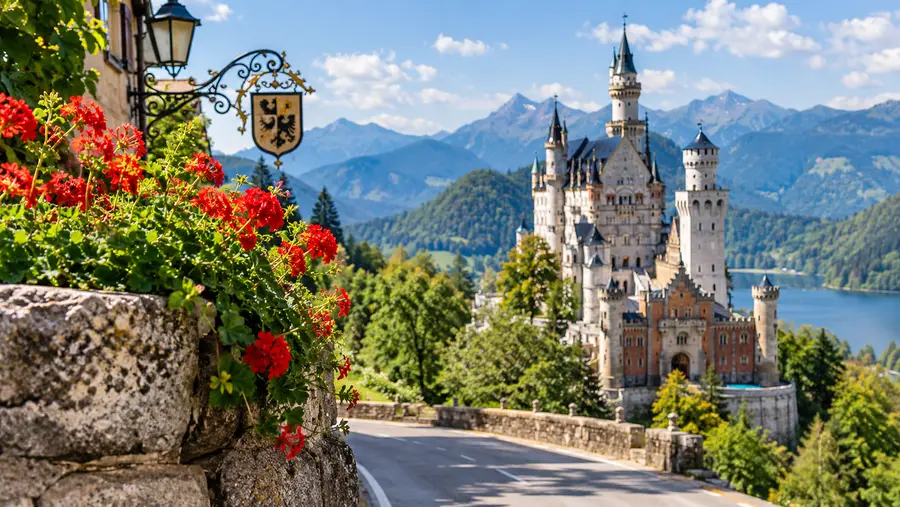
You cannot talk about romantic road germany castles without addressing the behemoth at the southern terminus. Neuschwanstein sits perched above the village of Hohenschwangau like something painted onto the mountainside. King Ludwig II had it built to escape reality, modeling it after medieval myths and the operas of Richard Wagner. It was never finished. Only about 15 rooms were ever fully decorated before Ludwig died under suspicious circumstances in Lake Starnberg in 1886. The tour inside lasts exactly 35 minutes, moving you room to room on timed audio headsets with guards steering crowds along polished wood floors. It feels brisk, almost hurried, but standing in the two-story Singer's Hall with its heavy brass chandeliers makes you forget the gift shop waiting at the exit.
Directly across the valley floor sits Hohenschwangau Castle, painted in a faded, mustard-yellow wash. Tourists routinely skip it to rush up the mountain to Neuschwanstein, which is a mistake. Hohenschwangau was Ludwig's childhood summer home, built by his father, King Maximilian II, on the ruins of a 12th-century fortress. It has lived-in warmth. You can see the heavy telescope Ludwig used as a grown man to watch workers assemble the walls of Neuschwanstein high above him. The walls are covered in romanticized German folk legends, painted directly onto plaster, and the rooms feel like an actual residence rather than an opera backdrop.
Getting up the hill to Neuschwanstein takes about 40 minutes on foot over a steep, paved trail through beech trees. Horse carriages will haul you up for around €8, but the horses look exhausted on hot afternoons and the queue for them often takes longer than walking. Shuttle buses run up toward Marienbrücke for roughly €3.50, dropping you a short stroll away from the bridge.
Pro tip: Walk ten minutes past Marienbrücke along the dirt trail heading up Mount Tegelberg; the crowds vanish completely after the first steep bend, and the view back toward the castle is unobstructed.
Marienbrücke itself is a slender footbridge suspended across the Pöllat Gorge. Looking down through the wooden floorboards will make your stomach drop if heights bother you. The view of Neuschwanstein from that wooden deck is the exact angle you see on postcards, calendars, and jigsaw puzzles across the globe. Go early. By 11:00 AM in the middle of summer, the wait just to step onto the bridge planking can stretch past 45 minutes under direct sun.
Medieval Strongholds: Harburg Castle and Marienberg Fortress
Harburg Castle is everything Neuschwanstein is not. It is genuine, thick-walled, and gritty. Perched on a limestone bluff above the Wörnitz River, Burg Harburg was first mentioned in documents dating back to 1150. It was owned by the House of Oettingen-Wallerstein for centuries and managed to avoid destruction during the Thirty Years' War, which leveled half the fortresses in Swabia. Because of that lucky streak, the complex remains one of the most intact medieval fortifications left anywhere in southern Germany.
Walking into Harburg feels like crossing into a fortified farming village. The inner courtyard has timber-framed barns, a bakery, a prison tower, and a small baroque church that was tucked inside during a 1700s renovation. You can walk the sentry path along the outer walls, peering through arrow slits down onto the red-tiled roofs of the town below. Michael Jackson once tried to buy the entire fortress in the late 1980s, but the princely family politely turned down his offer. If you are driving the Romantic Road, Harburg makes for an easy stop because the parking lot sits directly outside the main wooden drawbridge.
- Guided tours only: you can enter the central courtyard on your own for €3, but reaching the defensive ramparts, banquet hall, and armory requires joining the official 45-minute tour.
- Timing: tours run in German, though staff hand out well-translated English printed guides so you can follow along easily.
- Sturdy shoes required: the courtyard stones are worn glass-smooth from centuries of wagon wheels and livestock, making them treacherous when it rains.
- Onsite tavern: the castle inn serves cold Radler and hearty plates of Spätzle on outdoor benches under chestnut trees.
At the northern anchor of the route in Würzburg, Marienberg Fortress watches over the Main River from atop a steep vineyard ridge. A Celtic hill fort occupied this spot over 3,000 years ago, replaced later by Prince-Bishops who fortified the hill with massive stone bastions and dry moats deep enough to swallow houses. You can hike up from the Old Main Bridge through rows of Silvaner grapes. It takes roughly 25 minutes of continuous uphill climbing, but the view of Würzburg's copper church domes below is unbeatable.
The interior courtyard holds a round keep built in the early 1200s, alongside a deep water well carved 104 meters into solid rock. When the tour guide drops a cup of water down the shaft, you wait what feels like an eternity before hearing the faint slap against the water far below. The outer gardens on the fortress terrace are free to enter. They are lined with manicured hedges and stone balustrades where university students gather on warm evenings to share bottles of local Frankish white wine.
Schloss Weikersheim and the Lesser-Known Romantic Road Germany Castles
Between Würzburg and Rothenburg ob der Tauber lies the Tauber Valley, a quiet farming pocket where tour buses rarely stop for long. Schloss Weikersheim sits right in the center of it, blending seamlessly into the town market square. On the front, it looks like a sober medieval moat house with a stone bridge and heavy wooden gates. Walk through the inner courtyard and out the back, though, and the property opens into a sprawling Renaissance palace backed by an immense, symmetrical Baroque garden.
The garden was laid out in the early 1700s by Count Carl Ludwig, who clearly had an odd sense of humor. Lining the central gravel paths is a famous collection of dwarf statues. These stone grotesques caricature real court staff members from Ludwig's era, including the court fool, the treasurer, the palace cook holding a dead fowl, and various disgruntled guards. Beyond the dwarfs, rows of citrus trees in terracotta pots stretch out toward an ornate orangery that marks the boundary of the estate.
Note: Photography is strictly forbidden inside the historical state rooms at Weikersheim, and tour guides will not hesitate to call you out if you pull your phone from your pocket.
The centerpiece of Weikersheim is the Knights' Hall, completed around 1600. It is immense. The ceiling is coffered with dozens of oil paintings showing wild hunting scenes, while life-sized, three-dimensional deer and boar heads jut straight out from the walls. Their real antlers were mounted onto carved wooden skulls over four centuries ago. Seeing the hall illuminated by late afternoon sun slanting across the parquet floors gives you an honest sense of how German nobility entertained before the French palace style took over Europe.
Further south near Rothenburg, Burg Colmberg sits off the main highway, perched on a wooded ridge overlooking the Altmühl valley. It is a 1,000-year-old Hohenzollern fortress that now operates as a family-run hotel and restaurant. Unlike state-run museums, Colmberg is relaxed and open. You can walk around the outer dry moat, wander into the central courtyard past mounted iron cannons, and eat venison stew in a dining room hung with antique hunting swords without buying an entry ticket.
Book your romantic road germany experience:
Comparing Castles on the Romantic Road Germany: Costs and Logistics
Visiting these places requires a bit of practical budgeting. Entry prices have crept up, and parking fees add another €3 to €10 at every single major site. If you plan on touring the interior of more than two castles, you should consider your route and tickets ahead of time, especially during peak summer months when daily slots vanish weeks in advance.
| Castle | Nearest Town | Adult Ticket | Typical Time | Guided Tour Required? |
|---|---|---|---|---|
| Neuschwanstein | Schwangau / Füssen | €17.50 | 3.5 hours | Yes |
| Hohenschwangau | Schwangau / Füssen | €23.50 | 2.0 hours | Yes |
| Burg Harburg | Harburg (Schwaben) | €7.00 | 1.5 hours | Yes (for staterooms) |
| Schloss Weikersheim | Weikersheim | €8.00 | 2.0 hours | Yes (for interior) |
| Festung Marienberg | Würzburg | Free / €5.00 | 2.0 hours | Optional |
| Burg Colmberg | Colmberg | Free (Grounds) | 1.0 hour | No |
If you intend to tour Neuschwanstein, buy your ticket online through the official Bavarian Palace Department portal at least six weeks ahead. Tickets are tied to a strict 5-minute entry window. Miss that window because you got stuck behind a tractor on the B17 highway or couldn't find a parking spot in Hohenschwangau, and your ticket simply voids. The staff will not rebook you for later in the day.
For visitors spending an extended stretch in Bavaria, look into the 14-Day Bavarian Palace Pass (known locally as the Bayerische Schlösserverwaltung Mehrtageskarte). It costs around €35 for a single adult or €66 for a family ticket. It covers Neuschwanstein, Würzburg Residenz, the Marienberg Fortress museum, and dozens of other state properties across Bavaria. It does not cover Hohenschwangau or Burg Harburg because those are privately owned, but if you visit Neuschwanstein and two other Bavarian state palaces, the pass pays for itself easily.
How to Plan Your Castle Route Without Burning Out
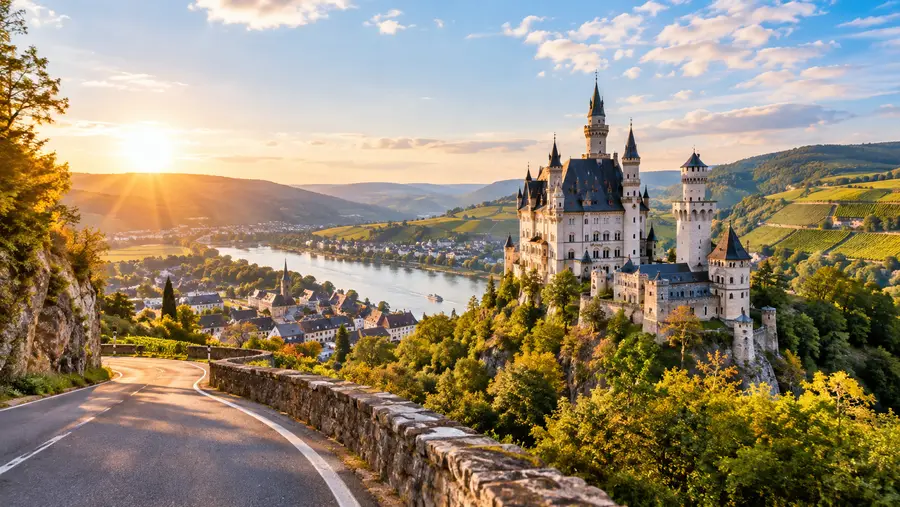
Pacing is everything when you travel this stretch of Germany. The temptation is to treat the route like a scavenger hunt, ticking off a stone ruin before lunch, an aristocratic residence after coffee, and a hillside fortress before dinner. That is a guaranteed recipe for misery. Medieval stone interiors are cold, poorly lit, and filled with flights of narrow stone stairs that will wear your knees out by 3:00 PM.
A sensible rhythm pairs one major indoor palace tour with an outdoor fortress exploration on alternate days. You get the historical depth from the formal guided walk, followed by the freedom to wander castle grounds at your own pace without being herded behind an audio tour wand.
- Anchor your trip at both ends: begin with Würzburg's Marienberg in the north and save Neuschwanstein for the finale in the south, keeping the architectural scale building as you travel.
- Skip identical interior tours: if you take the deep-dive tour through Schloss Weikersheim, stick to the exterior walls and courtyard at Harburg rather than paying for another guide.
- Time the valleys right: visit the gardens at Weikersheim in late afternoon when the low light cuts across the Tauber Valley vineyards and the tour groups have left for their hotels.
- Carry small euro coins: automated parking meters at almost every castle site on this route refuse foreign credit cards and insist on exact change in €1 and €2 coins.
I find that stopping in tiny villages between the fortress towns gives your senses time to clear. When you leave Harburg heading south, take the winding farm roads instead of staying glued to the main corridor. The Bavarian countryside changes slowly from rolling grain fields to dark pine forests, with dairy cattle grazing beneath limestone crags as the Alps begin to show on the southern horizon. When Ludwig's mountain walls finally appear against that granite backdrop, the sight hits with far more weight because you watched the landscape earn it mile by mile.
Frequently Asked Questions about castles on the romantic road germany
Which castle is the best on the Romantic Road?
Neuschwanstein has the most dramatic mountain setting, but Burg Harburg offers the best authentic medieval experience without the massive crowds or rigid ticketing rules.
Can you visit Neuschwanstein and Hohenschwangau on the same day?
Yes, both castles sit on opposite sides of the same small village of Hohenschwangau. You should leave at least two and a half hours between your tour times to allow for the steep walk between them.
Can you stay overnight in a castle on the Romantic Road?
Yes, Burg Colmberg near Rothenburg ob der Tauber is a 1,000-year-old fortress operating as a hotel, allowing guests to sleep in historic stone rooms with timber-framed ceilings.
Quick Reference
- Neuschwanstein tickets require online booking 4-6 weeks ahead.
- Marienberg Fortress grounds in Würzburg are free to explore.
- Burg Harburg is among Germany's oldest preserved medieval castles.
- The 14-day Bavarian Palace Pass costs €35 per adult.
Book your romantic road germany experience:
My Take
The stone towers along this highway survive because people here refused to pull them down when styles changed. Do not let the Instagram hype reduce your trip to a breathless sprint up the hill to Ludwig's balcony. Take an afternoon to lean against the warm sandstone ramparts at Harburg, listen to the river running far below, and let the real history soak in slowly before you hit the road again.
Read more about romantic road germany.